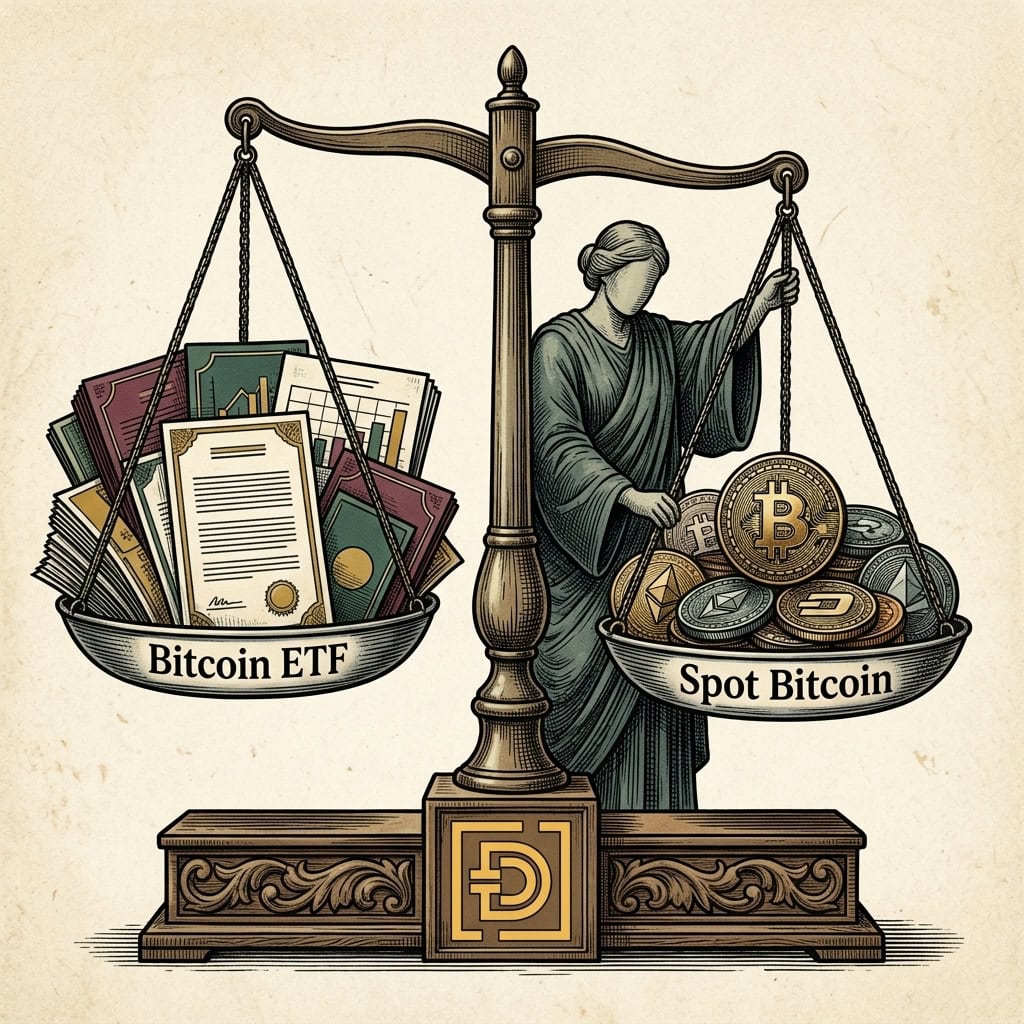
The launch of crypto ETFs has made it easier than ever for investors to gain exposure to bitcoin through traditional brokerage accounts. While ETFs are convenient and familiar, they are not the same as owning bitcoin directly. For investors who understand the differences, direct ownership is often the preferred approach, especially for long-term investors who want full exposure to the unique properties of bitcoin.
What Is a Crypto ETF?
A crypto ETF (exchange-traded fund) is a fund that tracks the price of bitcoin and trades on the stock market. Investors can buy shares of the ETF just like they would buy a stock. The ETF provider handles custody, security, and pricing, and the investor simply owns shares that represent exposure to the asset rather than the asset itself.
This structure is convenient because it allows investors to access bitcoin in retirement accounts like IRAs and 401(k)s and removes the need to learn wallets, private keys, and exchanges.
Owning Bitcoin Directly
Owning bitcoin directly means purchasing bitcoin and holding it in a wallet where you control the private keys. This can be done through exchanges and then moved to a hardware wallet or other secure storage solution. When you own bitcoin directly, you own the asset itself, not a share in a fund.
This distinction is extremely important because bitcoin was designed to be a bearer asset — meaning whoever controls the private keys controls the bitcoin.
Why Direct Exposure Is Preferred
1. You Actually Own the Asset
With an ETF, you own shares in a fund that holds bitcoin. With direct ownership, you own bitcoin itself. This removes reliance on fund managers, custodians, and financial institutions.
One of the core principles of bitcoin is self-custody and financial sovereignty. Direct ownership allows investors to fully participate in this benefit.
2. No Management Fees
Crypto ETFs charge annual management fees. While they may seem small (often around 0.20%–1.00%), over long periods these fees compound and reduce returns. Direct ownership typically only involves transaction fees when buying or moving bitcoin, not ongoing management fees.
3. Ability to Transfer and Use Bitcoin
Bitcoin held in an ETF cannot be transferred, spent, or moved. It can only be bought and sold within the fund. Directly owned bitcoin can be transferred anywhere in the world, used for transactions, moved between wallets, or held in cold storage.
This flexibility is a major advantage of direct ownership.
4. Reduced Counterparty Risk
ETFs introduce multiple counterparties: the fund issuer, custodian, broker, and clearing firms. While these are regulated institutions, they still introduce layers of risk. Direct ownership removes many of these risks because the investor holds the asset directly.
5. 24/7 Market Access
Bitcoin trades 24/7 globally, but ETFs only trade during stock market hours. This means ETF investors cannot react to weekend or overnight price movements, which are common in crypto markets.
When a Crypto ETF Might Make Sense
Despite the advantages of direct ownership, ETFs can still be useful in certain situations:
Final Thoughts
Crypto ETFs are an important step in the adoption of bitcoin because they make access easier for traditional investors. However, they are best viewed as a convenience product, not a replacement for owning bitcoin directly.
For long-term investors who believe in bitcoin as a new form of money and store of value, direct ownership is often preferred because it provides true ownership, eliminates management fees, reduces counterparty risk, and allows full control over the asset.
A common way investors approach this is by using both: holding bitcoin directly for long-term ownership and using ETFs in retirement accounts where direct ownership may not be possible.

Built And Operated In The USA 